

If you’re pumping breast milk regularly, having a best bra for pumping — one designed to hold pump flanges hands-free, support changing breast shape, and stay comfortable — can make a huge difference.
Contents
What makes a “good” pumping bra — key features & what to avoid
Before we look at specific bras, here are the factors experts highlight when choosing a pumping bra.
- Comfort & soft, breathable material — Your breasts change size (milk supply fluctuates), skin can be sensitive, and pumping may take 15–30 min. Cotton or cotton-blend fabrics with a bit of stretch (instead of rigid synthetics) tend to be most comfortable.
- No underwires (or minimal structural pressure) — Wired bras can compress breast tissue and may contribute to clogged ducts or mastitis. Experts typically recommend wireless or soft-cup bras for pumping / nursing.
- Hands-free pump compatibility — A pumping bra should securely hold flanges (pump attachments) in place so you don’t have to hold them manually. That usually means slits or openings aligned over the nipples.
- Adjustability / stretch to adapt to changing breast size — Because breast size and shape change frequently (full before pumping, emptier after), a good pumping bra needs adjustable straps and a band that can expand or contract.
- No excessive padding or foam — Heavy padding can soak up leaking milk (which is common during pumping) and become a site for moisture buildup — potentially irritating skin or growing bacteria.
- Easy to clean & durable — With repeated pumping, washing is inevitable; breathable, sturdy fabrics with simple construction tend to age better.
What to avoid / be cautious about:
- Underwired bras or bras with rigid cups — they apply pressure that can inhibit milk flow or cause discomfort.
- Bras that are too tight or too loose — tightness can block ducts, loose bras can fail to hold flanges properly.
- Bras made of non-breathable, synthetic-heavy fabrics — discomfort & irritation become more likely with extended wear.
As one lactation advice column sums it up: the right pumping bra should “support, hold pump cups securely, stay comfortable with body changes, and maintain a good seal without compressing the breast.”
Which Bra for Which Situation — Use Case Guide
| Your situation / need | Recommended bra type / model |
|---|---|
| You pump several times a day and want to multitask (work, hold baby, household tasks) | A hands-free pumping bra — e.g. Lace Hands Free Pumping Bra, or Bravado 2-in-1 |
| You mostly nurse and only occasionally pump | A comfortable nursing/pumping bra with soft fabric — e.g. Comfortable Pumping & Nursing Bra |
| You want strong support and shaping (postpartum, larger bust) but pump rarely | Structured/wired options — but be cautious for pumping times (e.g. Underwire Nursing Bra) |
| You want minimal pieces — one bra for both nursing and pumping | All-in-one 2-in-1 bras — e.g. Bravado Designs 2-in-1 Original |
⚠️ Few Important Warnings & Best Practices
- Avoid bras with underwires or overly tight bands — these can compress ducts and increase risk of clogged milk duct or mastitis.
- Make sure the bra fits properly — when your breasts are full (pre-pump), the cups should hold them without squashing or spilling out.
- Look for adjustable straps and bands — breast size changes over the course of a day and especially across postpartum weeks.
- Regularly wash and air-dry pumping bras — milk leaks are common, and a clean, breathable bra reduces skin irritation risk and improves hygiene.
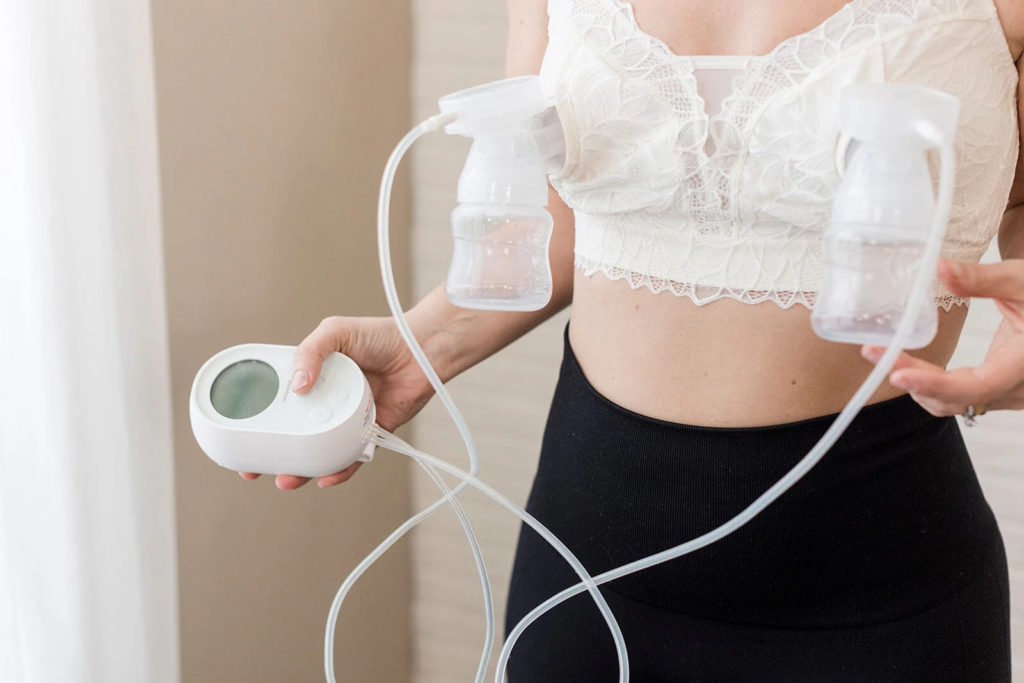
Best Pumping & Nursing Bras
| Bra Name | Description | Best For | Pros | Cautions / Cons |
|---|---|---|---|---|
| Bravado Designs 2-in-1 Original Pumping and Nursing Bra | All-in-one nursing + pumping bra; no need for a separate pump bustier. | Moms who want 1 bra for everything — simple daily use. | • Convenient 2-in-1 design • Comfortable, soft fabric • Good support for most body types • Easy transition between breastfeeding and pumping | • Not as “tight-seal” hands-free as specialized pumping bras |
| Lace Hands Free Pumping Bra | Holds pump flanges securely for fully hands-free pumping. | Busy moms who multitask while pumping. | • Strong hands-free hold • Soft + stretchy fabric • Reliable seal for most pumps • Comfortable for long sessions | • Might be less supportive for larger bust sizes |
| Comfortable Pumping & Nursing Bra | Simple everyday bra for both nursing and occasional pumping. | Moms who pump occasionally or want minimalism. | • Very comfortable • Lightweight & flexible • Breathable fabric • Good for daily wear | • Not the best option if you pump frequently • Less structural support for heavy use |
| Underwire Nursing Bra with Padded Cups | More structured nursing bra offering shaping and lift. | Moms wanting shape + support more than pumping features. | • Attractive silhouette • Strong support (especially larger bust) • Good for outings or work | • Underwire can press breast tissue and increase risk of clogged ducts or mastitis (LLLI recommendation) • Not ideal for frequent pumping |
| Lace Hands Free Pumping Bra (Alternative Colour) | Same model as the Lace hands-free bra but in a different design. | Moms who want functionality + a preferred color or style option. | • Same hands-free performance as the original • Soft and supportive • Stylish option | • Same potential limitations as the first version (may not suit all bust shapes) |
FAQs
What’s the difference between a “pumping bra” and a “regular nursing bra”?
A “pumping bra” is designed specifically to hold pump flanges in place so you can be hands-free while pumping; it typically has slits or openings aligned over the nipples for pump shields.
A “regular nursing bra” (for feeding) prioritizes easy access for breastfeeding — e.g. fold-down or unclaspable cups — but may not offer a stable hold for a breast pump.
Some bras are “2-in-1” (or “dual-use”) — usable both for pumping and nursing — but not all pumping bras are ideal for nursing, and not all nursing bras work for pumping.
When should I buy a pumping bra — during pregnancy, early postpartum, or later?
Ideally, many recommend buying once you have a sense of your “post-birth” size, because breast volume changes dramatically in early postpartum.
If you buy too early (in late pregnancy), the bra may either end up too tight after delivery or too loose once milk supply stabilizes.
If you anticipate frequent pumping (work, long days, etc.), having a pumping bra early can be helpful — but plan on re-fitting once milk supply and breast size settle.
Can I wear a pumping bra all day long (even when not pumping)?
Yes — many pumping bras are designed to double as regular bras or nursing bras, so wearing them all day is possible.
But — comfort & fit matter a lot. If the bra becomes too tight (especially when breasts are full), it may cause discomfort or impede milk flow.
Also: moisture — if you leak or use breast pads — can build up in thick / padded bras. Regular washing or using breathable/absorbent fabrics helps.
READ ALSO: How to scald breastmilk before freezing?