
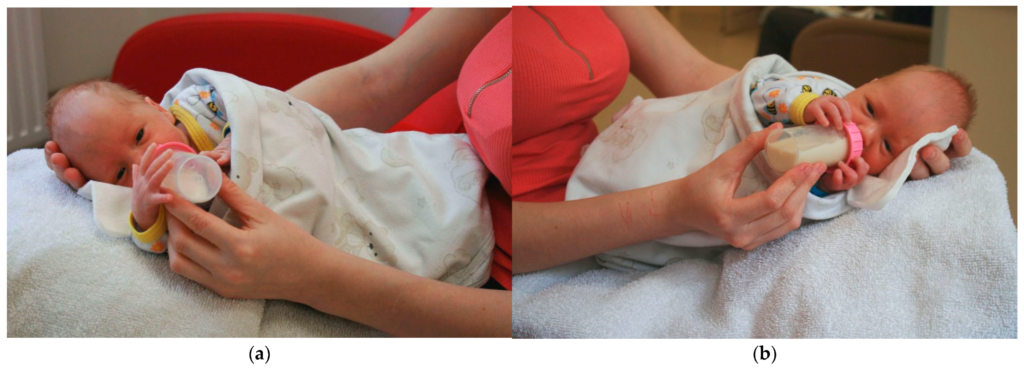
Newborn bottle feeding positions
Feeding a newborn isn’t just about nutrition — positioning affects digestion, comfort, bonding, gas, choking risk, and overall feeding success. The right posture helps prevent reflux, ear infections, overfeeding, and fussiness.
Contents
- 1 Why Feeding Position Matters
- 2 1. Semi-Upright (Cradle Hold) — Most Recommended
- 3 2. Paced Bottle Feeding (Upright Feeding) — Closest to Breastfeeding
- 4 3. Side-Lying Position — Gentle & Calming
- 5 4. Football Hold — Great After C-Section
- 6 5. Elevated Lap Position — For Gassy Babies
- 7 ❌ Positions to Avoid
- 8 How to Hold the Bottle Correctly
- 9 Signs Baby Is Comfortable
- 10 Signs Position Needs Adjustment
- 11 How Long Should a Newborn Feed?
- 12 Burping Tips by Position
- 13 Best Position for Special Situations
- 14 Common Mistakes to Avoid
- 15 FAQs
Why Feeding Position Matters
Proper positioning helps:
✅ Reduce choking and coughing
✅ Prevent gas and colic
✅ Support swallowing and breathing
✅ Lower reflux and spit-up
✅ Encourage paced, comfortable feeding
✅ Promote bonding and calmness
1. Semi-Upright (Cradle Hold) — Most Recommended
Baby reclines at a 45° angle in your arms
How to do it:
- Support baby’s head and neck
- Keep head higher than stomach
- Bottle tilted just enough to fill the nipple

Pros
- Natural, soothing, bonding-friendly
- Reduces choking and reflux
- Best for newborn control

Cons
- Can tire your arms during long feeds
Best for: Everyday feeding
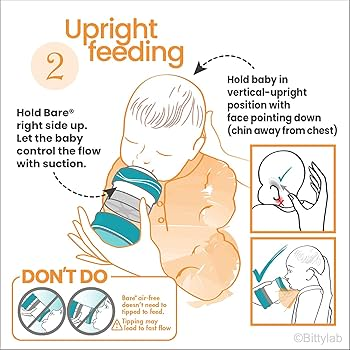
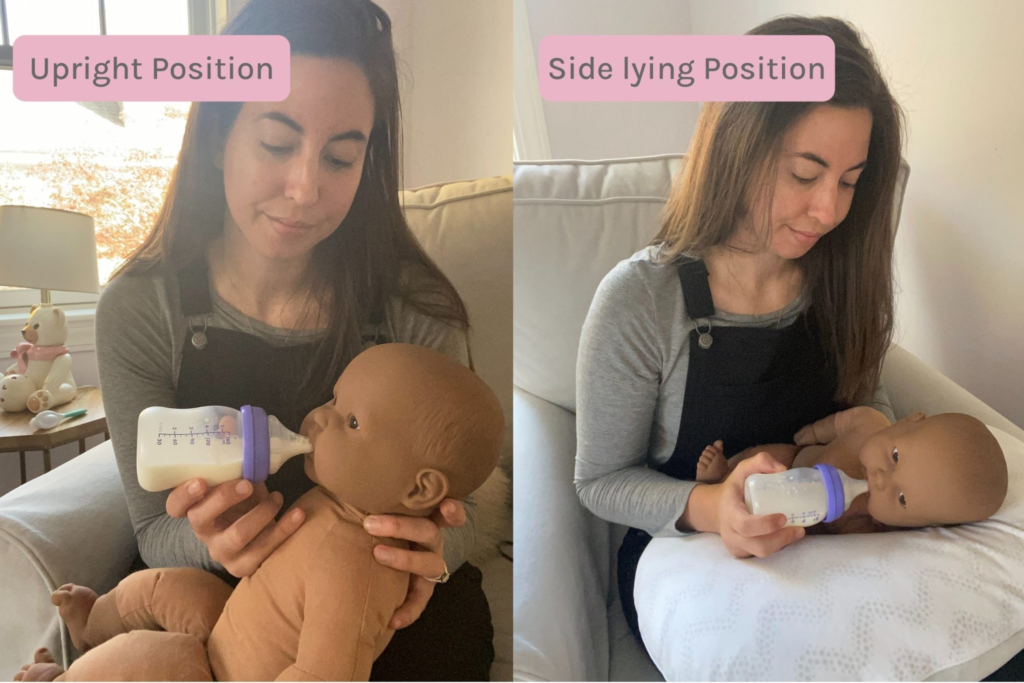
2. Paced Bottle Feeding (Upright Feeding) — Closest to Breastfeeding
Baby sits more upright and controls flow
How to do it:
- Hold baby almost vertical
- Pause frequently
- Let baby suck actively instead of milk pouring in
Pros
- Great for combo-fed babies
- Supports natural hunger cues
- Reduces gas
- Prevents overfeeding
Cons
- Takes more patience
Best for: Breast + bottle babies, reflux-prone newborns
3. Side-Lying Position — Gentle & Calming
Baby lies on their side while feeding
How to do it:
- Baby lies sideways on a pillow or your lap
- Head slightly elevated
- Keep bottle horizontal to control flow
Pros
- Helps slow fast drinkers
- Mimics breastfeeding
- Good for fussy or sleepy babies
Cons
- Needs close supervision
Best for: Comfort feeding, late-night feeds
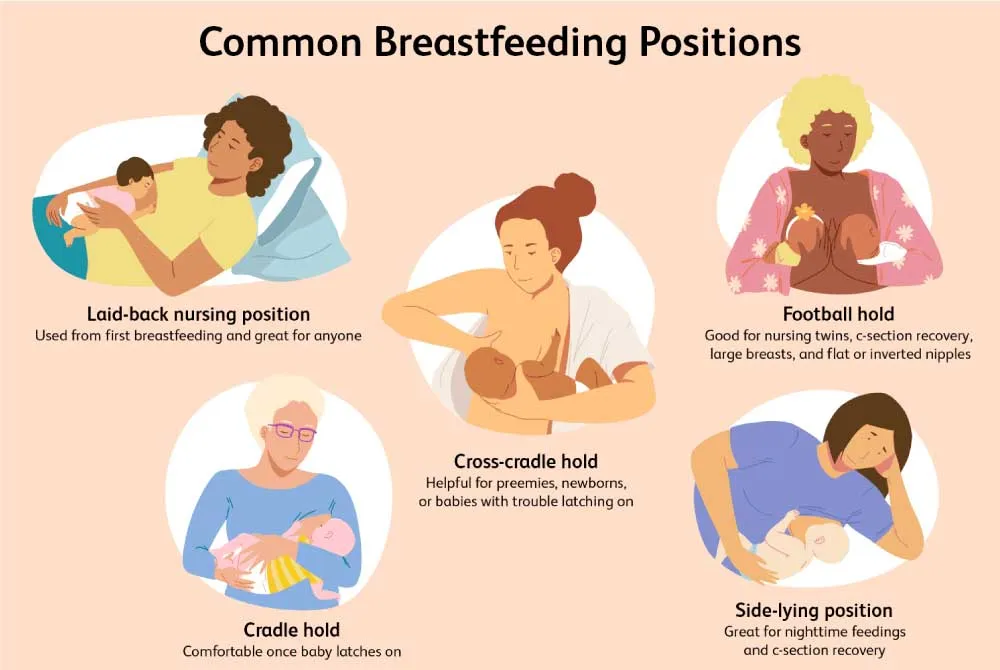
4. Football Hold — Great After C-Section
Baby tucked under your arm, facing upward
Pros
- Excellent head control
- Good for small or premature babies
- Avoids pressure on abdomen
Cons
- Takes practice
Best for: Post-surgery parents or small newborns
5. Elevated Lap Position — For Gassy Babies
Baby reclines across your thighs with head raised
Pros
- Comfortable support
- Easy burping
- Helps digestion
Cons
- Not ideal for every newborn
Best for: Babies prone to gas
❌ Positions to Avoid
🚫 Lying flat on their back
🚫 Bottle propping (VERY dangerous)
🚫 Feeding in a car seat or swing
🚫 Letting milk flow without baby sucking
Why?
These increase choking, ear infections, and overfeeding risk.
How to Hold the Bottle Correctly
✅ Keep nipple full of milk (prevents air swallowing)
✅ Hold bottle at a slight angle
✅ Watch baby’s cues — not bottle volume
✅ Pause every few minutes for burping
Signs Baby Is Comfortable
✔ Relaxed hands and face
✔ Steady sucking rhythm
✔ No gagging or coughing
✔ Calm breathing
Signs Position Needs Adjustment
⚠ Milk leaking from mouth
⚠ Gulping or choking
⚠ Fussiness or arching
⚠ Excess gas or spit-up
How Long Should a Newborn Feed?
⏱ 15–30 minutes per feeding
🍼 Every 2–3 hours in the first weeks
Stop if baby shows fullness cues
Burping Tips by Position
- Burp every 1–3 oz (30–90 ml)
- Upright burping works best
- If baby fusses → pause and burp
Best Position for Special Situations
| Situation | Best Position |
|---|---|
| Reflux / spit-up | Upright / paced feeding |
| Gas / colic | Elevated lap |
| Breast + bottle | Paced feeding |
| Premature baby | Football hold |
| Night feeding | Side-lying |
| After C-section | Football hold |
Common Mistakes to Avoid
❌ Feeding too fast
❌ Laying baby flat
❌ Ignoring hunger/fullness cues
❌ Forcing baby to finish bottle
❌ Skipping burps
FAQs
Can newborns bottle-feed lying down?
No — always slightly upright to prevent choking.
Is paced feeding better?
Yes — it reduces gas, reflux, and overfeeding.
Should bottle feeding mimic breastfeeding?
If possible — it helps regulate feeding rhythm and comfort.
How upright should baby be?
45°–70° incline is ideal.
What position helps prevent reflux and spit-up?
Upright or paced bottle feeding works best. Keep baby upright during and 15–20 minutes after feeding.
READ ALSO: Lactation cookies recipes for all situations