
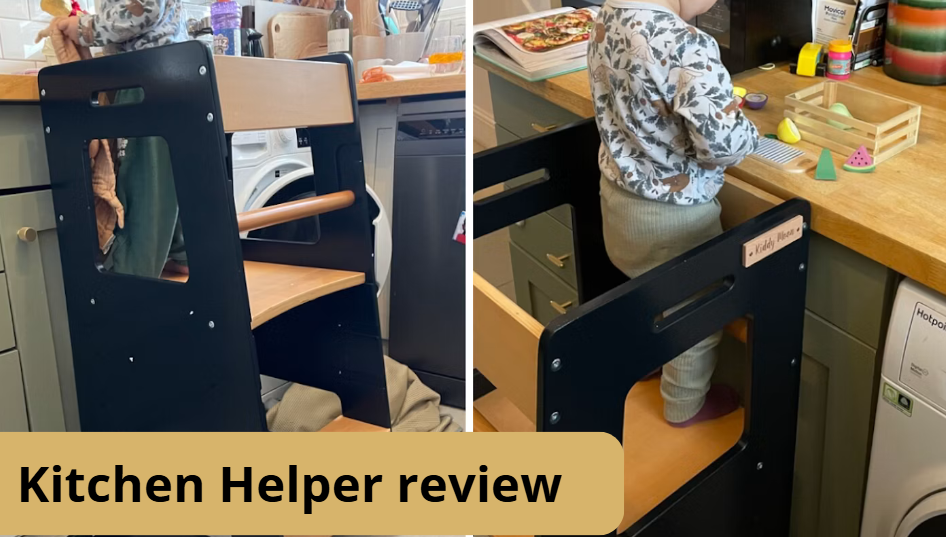
A Kitchen Helper (also called a learning tower, toddler tower, or kitchen stool helper) is one of the most practical pieces of furniture for families with young children. It safely elevates toddlers to countertop height, allowing them to participate in cooking, washing vegetables, baking, or other daily activities while reducing the need for parents to constantly lift them.
What Is a Kitchen Helper?
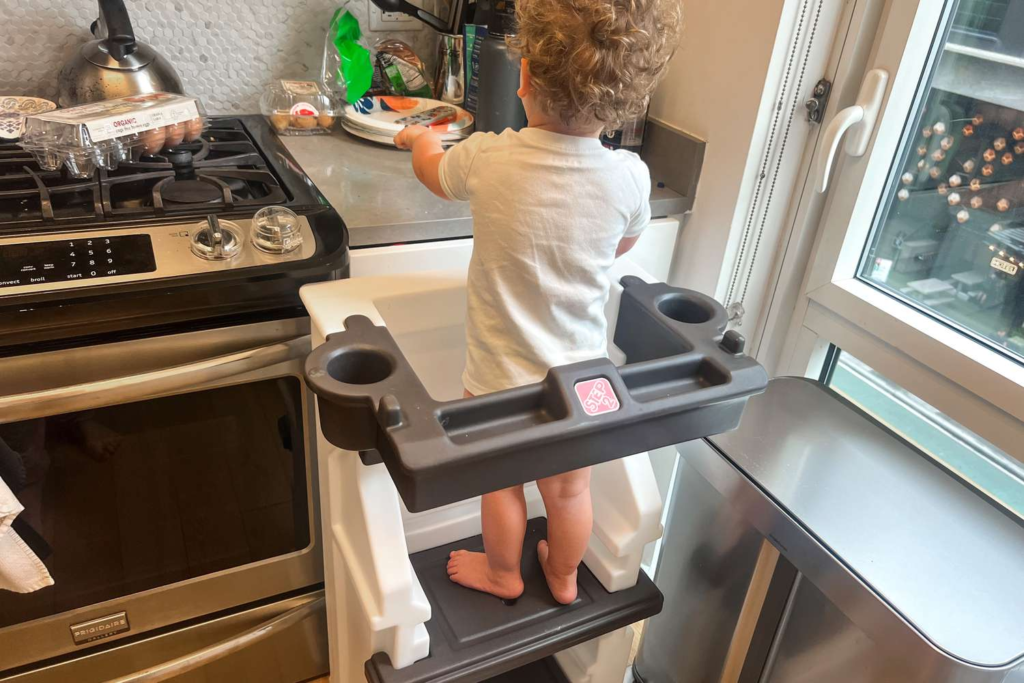
A kitchen helper is a sturdy platform with protective side rails that allows toddlers to stand safely at counter height.
Unlike a regular chair or step stool, a kitchen helper is specifically designed to reduce the risk of falls while encouraging independence.
Most are suitable for children between:
- 18 months
- 2 years
- 3 years
- up to around 6 years (depending on weight capacity)
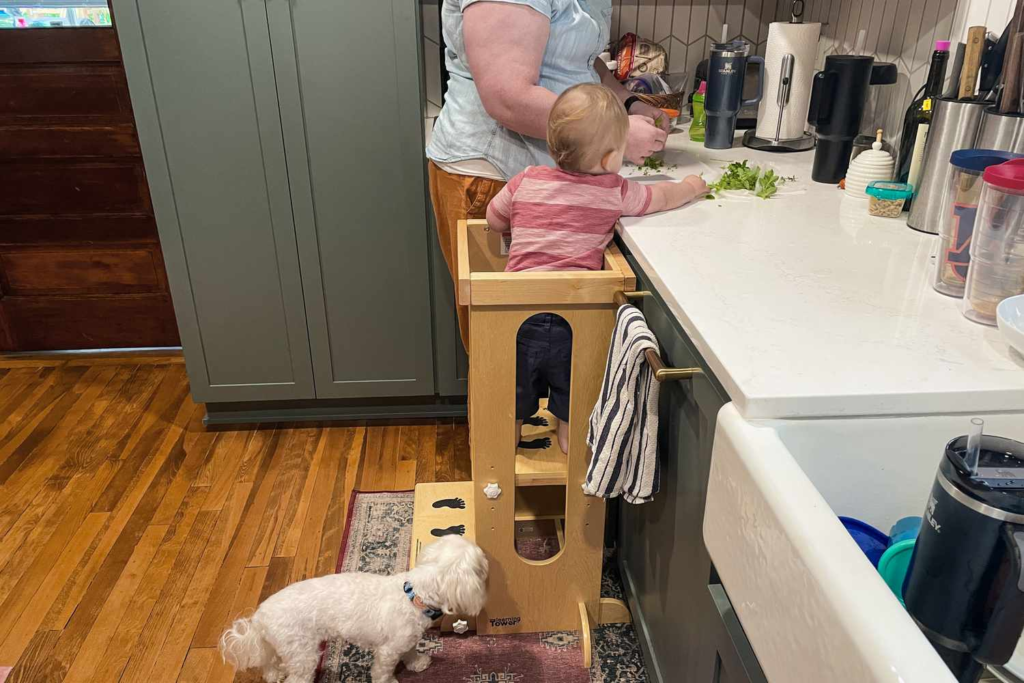
Why Parents Buy a Kitchen Helper
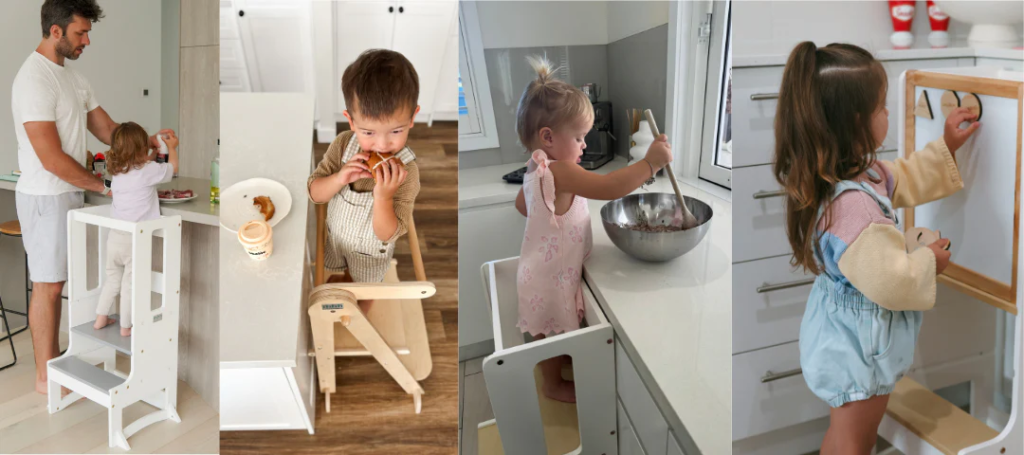
Parents love kitchen helpers because they allow children to:
- Help prepare meals
- Wash fruits and vegetables
- Mix ingredients
- Decorate cookies
- Learn cooking skills
- Brush teeth at bathroom sinks
- Participate in family routines
Many educators also recommend involving children in everyday household activities to build confidence and practical life skills.
Main Benefits
Encourages Independence
Children can safely climb into the tower themselves and participate in daily activities.
Improves Motor Skills
Cooking activities help develop:
- Hand-eye coordination
- Balance
- Fine motor skills
- Grip strength
Creates Family Bonding Time
Preparing meals together encourages conversation and cooperation.
Reduces Parent Back Strain
Instead of constantly holding a child while cooking, the helper keeps them safely at countertop level.
Builds Confidence
Toddlers enjoy feeling included and capable when completing simple kitchen tasks.
Different Types of Kitchen Helpers
Wooden Kitchen Helpers
The most popular option.
Pros:
- Durable
- Attractive appearance
- Eco-friendly
- Stable
Cons:
- Heavier
- Usually more expensive
Best for:
Families wanting long-term durability.
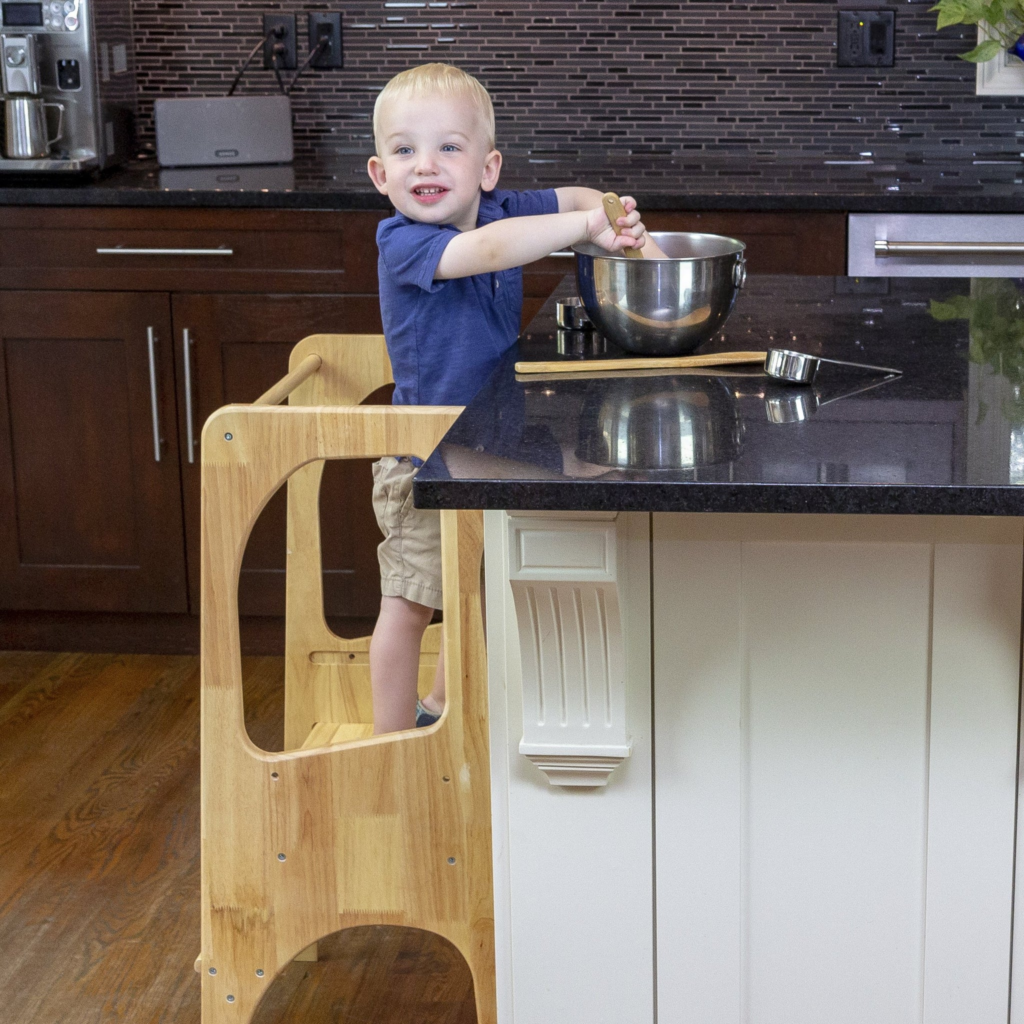
Foldable Kitchen Helpers
Designed for small homes or apartments.
Pros:
- Space-saving
- Easy storage
- Portable
Cons:
- Slightly less rigid than fixed models
Best for:
Small kitchens.
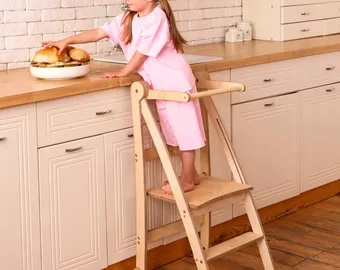
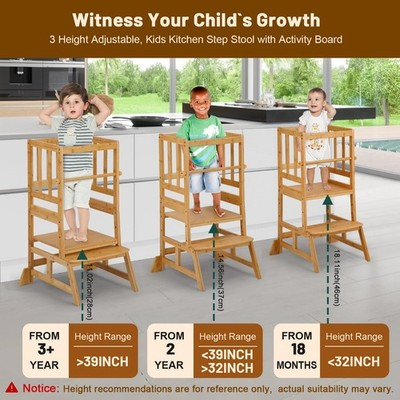
Adjustable Kitchen Helpers
Feature adjustable standing platforms.
Advantages:
- Grows with the child
- Longer usable lifespan
- Better ergonomic positioning
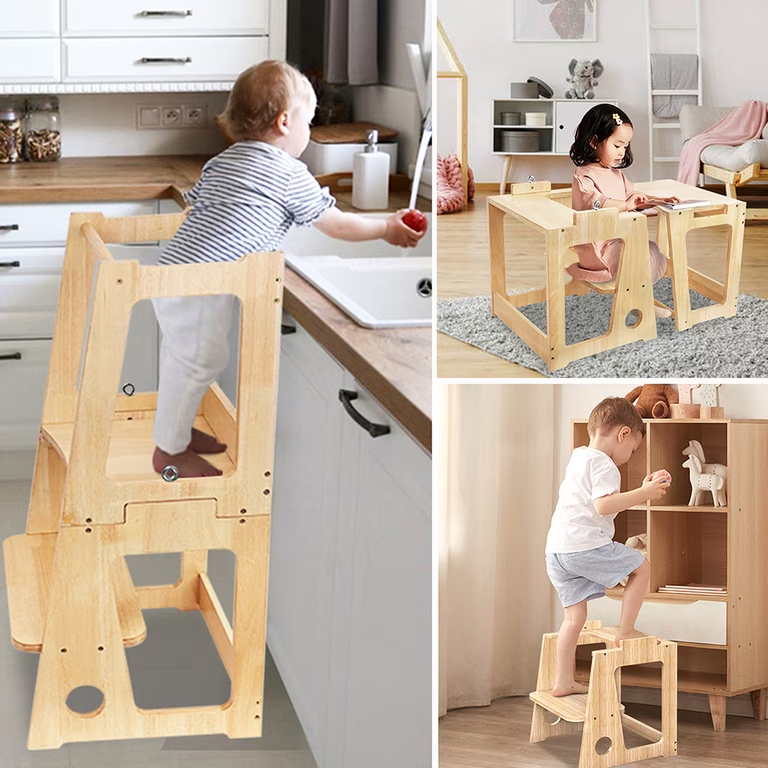
Convertible Kitchen Helpers
Some models transform into:
- Table and chair
- Easel
- Play desk
- Activity station
Ideal for families wanting multifunctional furniture.
Important Safety Features
Before buying, check for:
- Wide base
- Anti-tip design
- Non-slip feet
- Guard rails
- Smooth edges
- Stable construction
- Quality hardware
- Weight capacity
Avoid lightweight stools that wobble easily.
Materials
Solid Wood
Advantages:
- Strong
- Long-lasting
- Beautiful appearance
Disadvantages:
- Higher cost
- Heavier
Plywood
Pros:
- Lightweight
- Affordable
- Durable
Cons:
- Quality varies by manufacturer
MDF
Budget-friendly but generally:
- Heavier
- Less moisture resistant
- Less durable over time
Parents
Height Adjustment
Many premium kitchen helpers offer:
- 2-position platforms
- 3-position platforms
- 4-position platforms
Adjustability allows children to continue using the helper as they grow.
Weight Capacity
Typical limits include:
- 100 lbs
- 150 lbs
- 200 lbs
Always follow the manufacturer’s recommendations.
Is a Kitchen Helper Safe?
Yes—when:
- Used on a flat floor
- Properly assembled
- Adult supervision is present
- The child follows basic safety rules
Never leave toddlers unattended near:
- Hot pans
- Boiling water
- Sharp knives
- Electrical appliances
Cleaning and Maintenance
Wooden models usually require minimal maintenance.
Clean with:
- Damp cloth
- Mild soap
- Dry towel
Avoid soaking wooden surfaces.
Regularly inspect:
- Screws
- Bolts
- Platform stability
Pros and Cons

Pros
- Encourages independence
Supports Montessori learning
Very stable
Safe alternative to chairs
Long lifespan
Great for cooking activities
Helps develop confidence
Useful beyond the kitchen

Cons
- Takes up floor space
Some models are expensive
Requires supervision
Wooden versions can be heavy
Who Should Buy One?
A kitchen helper is ideal if:
- You cook frequently
- Your toddler wants to help
- You value Montessori-style learning
- You want safer alternatives to chairs
- You have enough kitchen space
Who May Not Need One?
It may not be necessary if:
- Kitchen space is extremely limited
- Your child rarely shows interest in kitchen activities
- You’re looking for a portable travel solution
Buying Checklist
Consider these features before purchasing:
- Adjustable height
- Solid construction
- Non-slip feet
- Safety rails
- Easy assembly
- Smooth finish
- High weight capacity
- Foldable design (if needed)
- Quality hardware
- Positive customer reviews
READ ALSO: Are retractable baby gates safe?
