
How Long Does It Take to Get Pregnant?
Getting pregnant can happen during the first month of trying, but for many couples, conception takes several months. Understanding how fertility works, when ovulation occurs, and which factors influence pregnancy can help you improve your chances.
Most couples conceive naturally within 6–12 months of regular, unprotected sex. However, the exact timeline depends on age, reproductive health, ovulation patterns, sperm quality, and how frequently intercourse occurs.
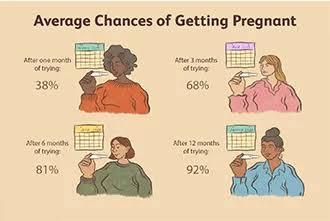
According to the American Society for Reproductive Medicine (ASRM), approximately 80% of couples conceive within their first six months of trying. The NHS reports that more than 80% of couples in which the woman is under 40 conceive within one year.
How Long Does It Usually Take to Get Pregnant?

There is no universal conception timeline. Some couples become pregnant during their first cycle, while others need several months even when neither partner has a fertility problem.
| Time trying | What it generally means |
|---|---|
| First month | Pregnancy is possible, but not guaranteed |
| 1–3 months | A common period for conception |
| 3–6 months | Still within the typical timeframe |
| 6–12 months | Many additional couples conceive |
| More than 12 months | Fertility evaluation is generally recommended, or sooner depending on age and risk factors |
These timeframes assume regular intercourse without contraception.
Importantly, taking several months to become pregnant does not automatically indicate infertility.
How Long Does It Take to Get Pregnant After Sex?
Conception and a positive pregnancy test do not happen at the same time.
Fertilization may occur within hours of ovulation when sperm are already present. If intercourse happens several days before ovulation, sperm may survive until an egg is released.
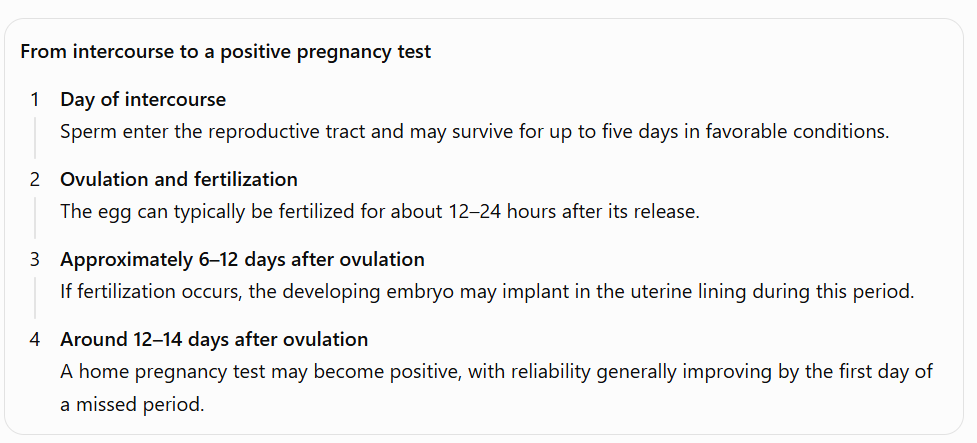
Pregnancy tests detect human chorionic gonadotropin (hCG), a hormone produced after implantation begins.
For the most reliable result, test from the first day of your missed period. If you do not know when your period is due, the NHS recommends testing at least 21 days after unprotected sex.
Pregnancy Chances by Age
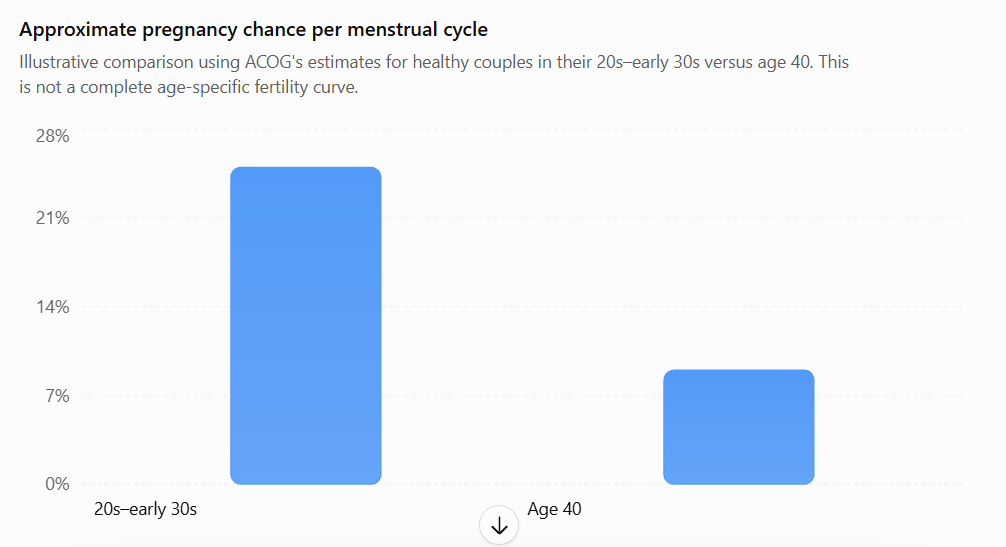
Age is one of the most important factors influencing fertility, particularly because the number and quality of available eggs decline over time.
| Female age | General fertility outlook |
|---|---|
| 20–29 | Typically high natural fertility |
| 30–34 | Usually good fertility, with gradual decline |
| 35–37 | Fertility decline becomes more noticeable |
| 38–39 | Lower monthly conception probability |
| 40–42 | Substantially reduced fertility |
| 43+ | Natural conception becomes increasingly unlikely |
Understanding Ovulation and the Fertile Window
Timing intercourse correctly can make a meaningful difference when trying to conceive.
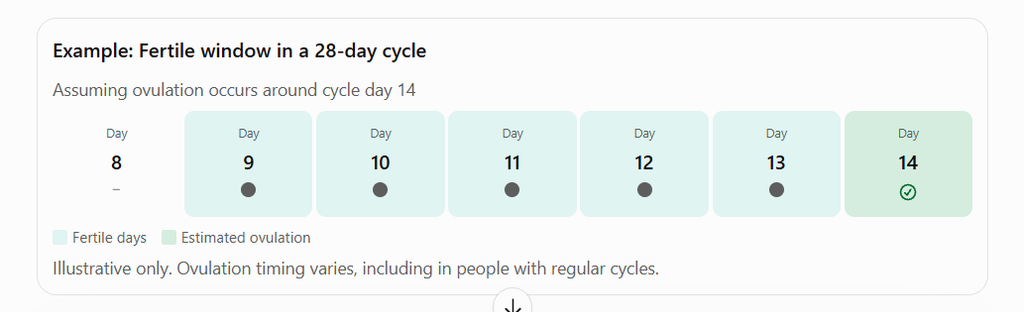
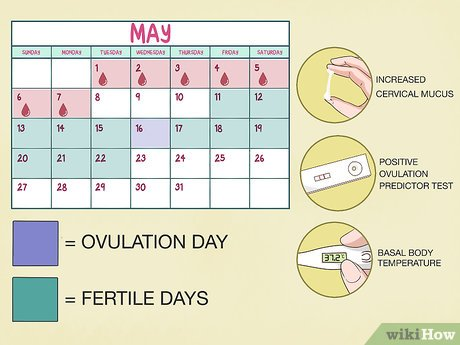
Ovulation occurs when an ovary releases an egg. Pregnancy is most likely when sperm are already present in the reproductive tract before the egg is released.
The fertile window lasts approximately six days: the five days before ovulation and ovulation day itself.
How to identify ovulation
- Ovulation predictor kits: Detect a rise in luteinizing hormone (LH), which typically occurs one to two days before ovulation.
- Cervical mucus: Often becomes clear, slippery, and stretchy around the fertile window.
- Basal body temperature: Usually rises slightly after ovulation and can help identify patterns over multiple cycles.
- Cycle tracking: Can provide estimates but cannot reliably confirm the exact day of ovulation.
What Factors Affect How Quickly You Get Pregnant?
Several biological, medical, and lifestyle factors may affect how long it takes to conceive.
Reproductive health
Conditions that may interfere with conception include:
- Ovulatory disorders, including polycystic ovary syndrome (PCOS)
- Endometriosis
- Blocked or damaged fallopian tubes
- Certain uterine abnormalities
- Thyroid or hormonal disorders
- Reduced sperm count, motility, or other sperm abnormalities
Some of these conditions have symptoms, while others may only be discovered through fertility testing.
Body weight and nutrition
Being significantly underweight or overweight can affect ovulation and reproductive hormones.
Maintaining a weight that supports metabolic and reproductive health may improve fertility, particularly when irregular ovulation is present.
There is no specific diet proven to guarantee or dramatically accelerate natural conception.
Smoking, alcohol, and drugs
Smoking and certain recreational drugs can negatively affect fertility. Heavy alcohol consumption may also impair reproductive health.
Avoiding smoking and recreational drugs, and avoiding alcohol when pregnancy is possible, are sensible steps during preconception planning.
Stress and sleep
Severe or chronic stress can sometimes interfere with menstrual cycles and reproductive health. However, ordinary day-to-day stress is not a proven explanation for most infertility.
People should not assume that difficulties conceiving are simply caused by worrying too much.
Male fertility
Sperm health matters just as much as ovulation and egg health.
Low sperm concentration, poor motility, and certain medical conditions can make fertilization more difficult.
A semen analysis is often one of the first tests recommended when conception is taking longer than expected.
How to Increase Your Chances of Getting Pregnant
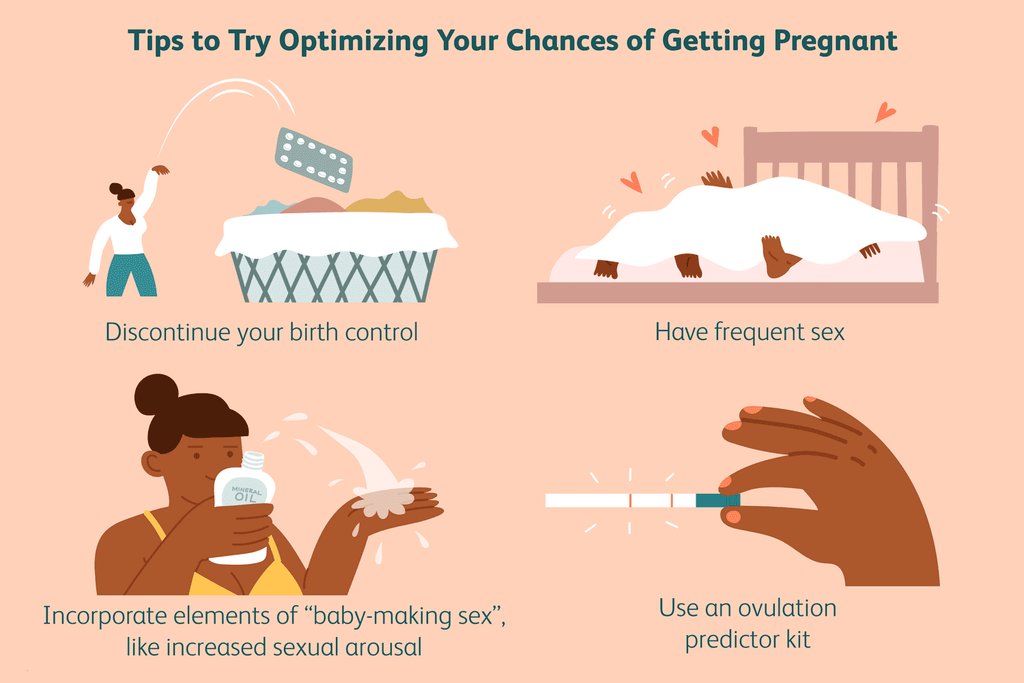
There is no guaranteed way to conceive immediately, but evidence-based practices can help optimize your chances.
1. Have intercourse regularly
Aim for every one to two days during the fertile window, or every two to three days throughout the cycle.
2. Learn your ovulation pattern
Ovulation kits and cervical mucus observations can help identify days when conception is most likely.
3. Start taking folic acid
The CDC recommends 400 micrograms daily at least one month before pregnancy and during early pregnancy to help prevent neural tube defects. Some people need a different dose based on medical history.
4. Prepare your health for pregnancy
Review medications, vaccinations, chronic medical conditions, and relevant family history with a healthcare professional.
5. Maintain healthy habits
Eat a balanced diet, exercise moderately, prioritize sleep, and avoid smoking and recreational drugs.
These recommendations are consistent with CDC preconception guidance and ASRM fertility recommendations.
How Long Does It Take to Get Pregnant After Stopping Birth Control?
The return of fertility depends partly on the contraceptive method used.
| Birth control method | Typical fertility return |
|---|---|
| Birth control pill | Often within weeks |
| Hormonal IUD | Usually quickly after removal |
| Copper IUD | Immediate or very rapid |
| Contraceptive implant | Often within days or weeks after removal |
| Vaginal ring or patch | Often within weeks |
| Contraceptive injection | May take several months to a year or longer |
The injectable contraceptive, such as Depo-Provera, is an important exception because its effects on ovulation can persist for a prolonged period.
Most reversible contraceptives do not cause permanent infertility. HSE.ie+1
How Long Should You Try Before Seeing a Fertility Specialist?
According to ASRM’s 2026 guidance, the recommended timeframe for fertility evaluation depends on age and medical history. asrm.org
| Age | When to seek evaluation |
|---|---|
| Under 35 | After 12 months of trying |
| 35–40 | After 6 months of trying |
| Over 40 | Seek prompt evaluation rather than waiting |
| Any age with known fertility concerns | Seek evaluation earlier |
You should also consider earlier evaluation if you have very irregular or absent periods, known endometriosis, previous pelvic infections, a history of chemotherapy, or suspected male-factor infertility.
A fertility evaluation may include a review of medical history, menstrual cycles and ovulation, a semen analysis, and assessment of the uterus and fallopian tubes.
Not every person needs every test. Your clinician should select testing based on your situation.
Common Fertility Myths: What Actually Works?
| Fertility claim | Evidence-based verdict |
|---|---|
| Certain sex positions increase pregnancy chances | No convincing evidence |
| Lying with your legs raised after sex helps | Not proven |
| You must have sex every day | Not necessary |
| Ovulation always occurs on cycle day 14 | False |
| Fertility supplements guarantee conception | False |
| You cannot conceive after age 40 | False |
| A regular menstrual cycle guarantees fertility | False |
| Taking longer than three months means infertility | False |
According to ASRM, specific sexual positions and post-intercourse routines have not been shown to increase fertility. asrm.org
Rather than relying on unproven methods, focus on intercourse timing, overall reproductive health, and appropriate medical assessment.
Final Review: How Long Does It Really Take to Get Pregnant?
For many couples, getting pregnant takes between a few months and a year. Some conceive during their first cycle, while others require more time or fertility treatment.
The most important considerations are:
- Age: Fertility generally declines over time, particularly after the mid-30s.
- Timing: Intercourse during the six-day fertile window offers the best chance of conception.
- Consistency: Regular intercourse is usually more useful than attempting to pinpoint one perfect day.
- Health: Reproductive conditions, sperm quality, and certain lifestyle factors can influence conception.
- Medical support: Fertility evaluation can identify treatable problems when pregnancy is taking longer than expected.
Overall conclusion
The best approach to conception combines realistic expectations, understanding of the menstrual cycle, regular intercourse, and appropriate preconception healthcare.
Taking several months to conceive is common and does not necessarily signal a problem. At the same time, recognizing when professional assessment is appropriate can help avoid unnecessary delays.
Medical sources and further reading
This guide is based on established medical guidance, including:
- American Society for Reproductive Medicine — Optimizing Natural Fertility
- ASRM — Fertility Evaluation of Infertile Women (2026)
- ACOG — Evaluating Infertility
- NHS — Infertility Overview
- CDC — Planning for Pregnancy
Medical disclaimer: This guide is for general educational purposes and does not replace individualized advice from an obstetrician–gynecologist or fertility specialist.
READ ALSO: How To Hide a Pregnancy Bump?
